Voice AI has become remarkably good at recognizing words and generating natural-sounding speech. But having a real conversation is a much harder problem. People interrupt each other, pause to think, change topics halfway through a sentence, laugh, hesitate, speak over one another, switch between formal and casual language, and react instantly to what the other person has just said. Traditional speech datasets built around isolated recordings and predefined scripts capture only a small part of that complexity.
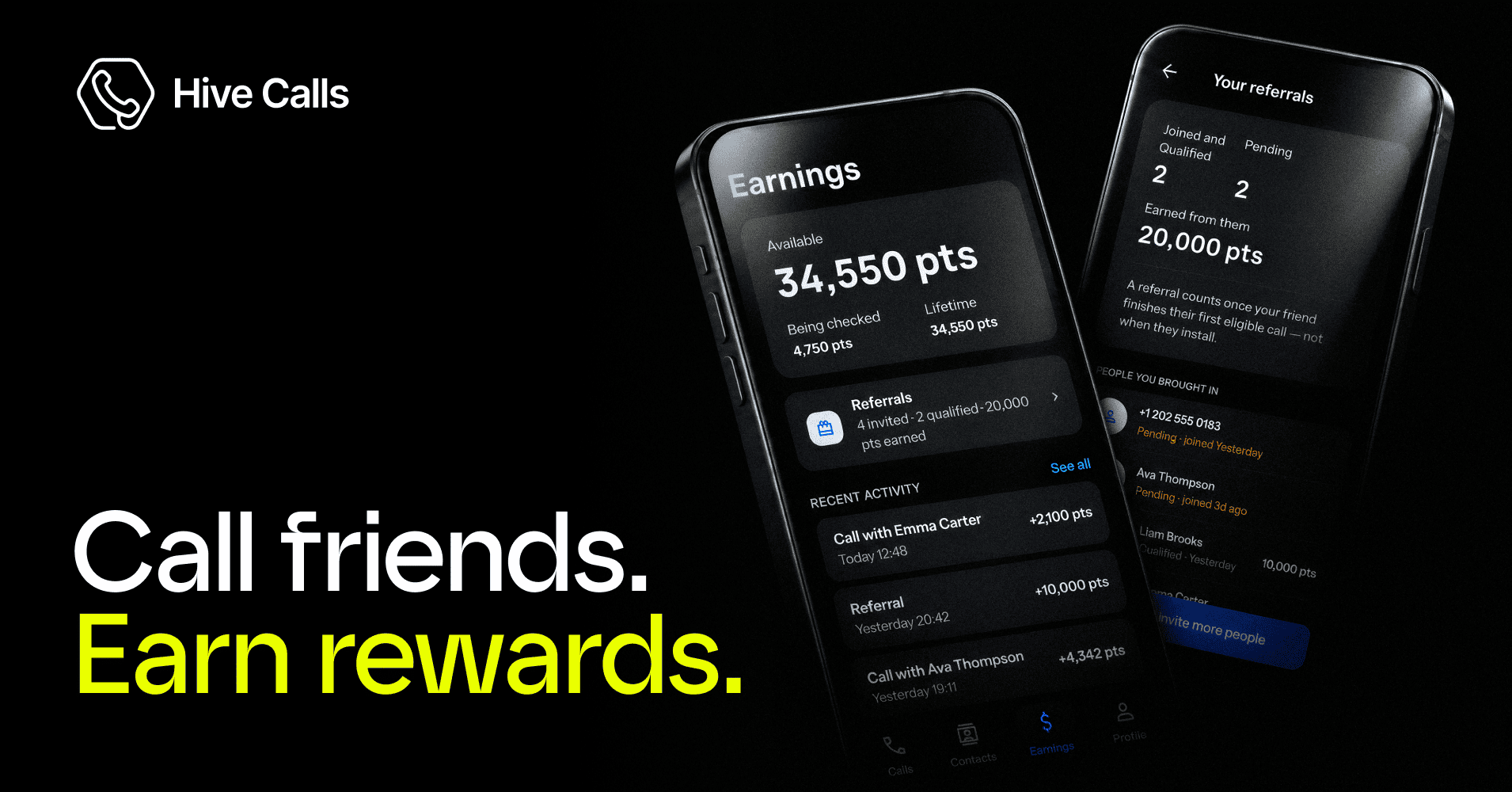
That is why we created Hive Calls, a new mobile app from DataHive built specifically around real human conversations. Hive Calls allows DataHive users to call each other directly, talk naturally about the subjects they choose, and contribute qualifying conversations that can be used to build datasets for training, testing, and improving modern voice AI systems.
Instead of asking people to perform for a microphone, Hive Calls is designed around something much more familiar: simply having a conversation.
Why Voice AI Needs Real Conversations
For years, many speech datasets followed a relatively simple format: give a speaker a sentence, ask them to read it aloud, record the result, and attach a transcript. This type of data remains extremely useful for technologies such as automatic speech recognition and text-to-speech. But conversational AI requires something more.
A real dialogue contains information that is difficult to recreate with scripted recordings. Speakers react to each other in real time, leave pauses of different lengths, interrupt, correct themselves, use short responses such as “yeah” or “mm-hm,” change their tone, and adjust their speaking style depending on the conversation. Two recordings can contain almost identical words while communicating very different things because of timing, emotion, emphasis, or context.
This matters increasingly as voice technology moves beyond the traditional pipeline of speech recognition → text response → synthesized speech. New speech-to-speech systems and real-time voice assistants are expected not only to understand what a person says, but also to know when to respond, when to wait, how to handle interruptions, and how to maintain the natural rhythm of a conversation.
To build systems like these, AI companies need more than clean sentences. They need real conversational speech data.
Hive Calls was created to help collect exactly that.
How Hive Calls Works
Hive Calls makes contributing conversational audio simple. After installing the app, users can connect with other eligible DataHive users and start a voice call directly from their phone. The conversation does not need to follow a fixed script or a predefined list of questions. Friends can talk about travel, work, hobbies, entertainment, daily life, personal experiences, or any other subject that leads to a genuine two-way discussion.
With the consent of everyone participating in the call, qualifying conversations may be recorded and processed by DataHive. Calls are then checked for factors including duration, audio quality, eligibility, authenticity, and other quality drequirements before they can be accepted.
The key requirement is simple: the call must contain a real conversation between real people. Silence, leaving a call running without meaningful interaction, prerecorded audio, or AI-generated voices do not count as valid conversational data unless a specific task explicitly allows otherwise.
Eligible users can currently receive rewards for up to 40 qualifying minutes per day, and both participants can earn when the call meets the required conditions. Hive Calls also allows users to invite people they already know, making it easier to have conversations that feel natural rather than staged.
From a Phone Call to an AI Training Dataset
A conversation collected through Hive Calls can contain much more useful information than a transcript alone. The audio preserves not only the words being spoken, but also the relationship between the speakers: who responds first, where pauses occur, how quickly people react, when their speech overlaps, how their tone changes, and how the conversation develops over time.
These signals can be valuable for training and evaluating voice assistants, conversational AI, speech-to-speech models, automatic speech recognition systems, and other voice technologies.
For example, imagine two people discussing a holiday plan. One speaker begins explaining an idea, the other interrupts with a question, both laugh, and then the conversation changes direction. A transcript can capture the words, but much of the interaction exists in the audio itself. The timing, interruption, hesitation, laughter, and change in speaking style are all part of how humans understand one another.
This is one reason conversational datasets are becoming increasingly important for the next generation of voice AI. Systems that are expected to communicate naturally need training data that reflects how conversations actually happen outside a recording studio.
Approved datasets created from qualifying Hive Calls conversations may be licensed to AI and technology companies under data-use agreements. Account information such as phone numbers, email addresses, and payment information is not normally included in customer datasets. The focus is on the speech and conversational data itself.
Capturing the Way People Actually Speak
Another advantage of collecting real conversations is variability. People do not speak the same way in every situation. The same person may sound completely different when speaking with a friend than when reading a prepared sentence. Vocabulary changes, sentences become less structured, words get shortened, speakers hesitate more often, and emotion becomes part of the interaction.
This variability is particularly important for multilingual voice AI. Real conversations may include different accents, regional vocabulary, slang, code-switching, borrowed words, or pronunciation patterns that rarely appear in scripted datasets. The more conversational data reflects these real-world behaviors, the better it can represent the environments in which future voice systems will actually be used.
Hive Calls therefore expands the types of speech data DataHive can collect. Traditional recording missions remain useful for controlled tasks, but conversational calls introduce another layer: the interaction between speakers.
Instead of collecting only individual voices, we can now capture how those voices respond to one another.
Why Authenticity Matters
A larger dataset is not automatically a better dataset. For conversational AI, the usefulness of a recording depends heavily on whether the interaction is genuine.
If two people simply read lines from a script, leave a phone connected in silence, or play prerecorded speech, the resulting audio may be long but contain very little useful conversational information. A real dialogue is valuable because neither participant knows exactly what the other person will say next. Each speaker has to listen, understand, react, and continue the conversation.
That unpredictability is part of the data.
It creates natural pauses, spontaneous responses, corrections, interruptions, and shifts in tone that are difficult to reproduce artificially. Hive Calls is designed around preserving these characteristics while applying quality and fraud-prevention checks to submitted conversations.
The goal is not simply to collect more audio hours.
It is to collect better examples of how humans actually communicate.
A New Way to Contribute to DataHive
Hive Calls represents a new direction for DataHive. Until now, many contributions to speech datasets have naturally focused on individual recordings: reading sentences, responding to prompts, describing a topic, or completing other structured voice tasks.
Hive Calls adds another format entirely.
Users can now contribute by having ordinary conversations with other people, while helping create the kind of conversational datasets that modern voice AI increasingly needs. For participants, that means less time following scripts and more freedom to simply talk. For AI developers, it can mean access to speech data containing the dynamics of real communication rather than only isolated utterances.
As the Hive Calls community grows, the same infrastructure can help capture a wider range of languages, accents, conversation styles, devices, and real-world speaking conditions. That creates the potential for increasingly diverse conversational datasets for training and evaluating future voice systems.
Download Hive Calls and Start Talking
The next generation of voice AI will need to do more than recognize words. It will need to understand conversations: when people pause, how they react, when they interrupt, how their tone changes, and how meaning develops between multiple speakers over time.
That requires better conversational data.
Install the app, invite someone you know or connect with another eligible DataHive user, and start a natural conversation. Your calls can become part of the datasets helping voice AI learn how people actually speak to each other.
Real conversations. Better voice AI.